

How Strip Heel Platform Height Affects Spins and Balance
Every group has that one dancer who spins in “fives” as if she were wearing sneakers. You watch her, buy the same pair, step into the middle of the studio and realize that even getting to the barre without support is already a challenge. The conclusion seems obvious and discouraging – the problem must be me, I just need to train more.
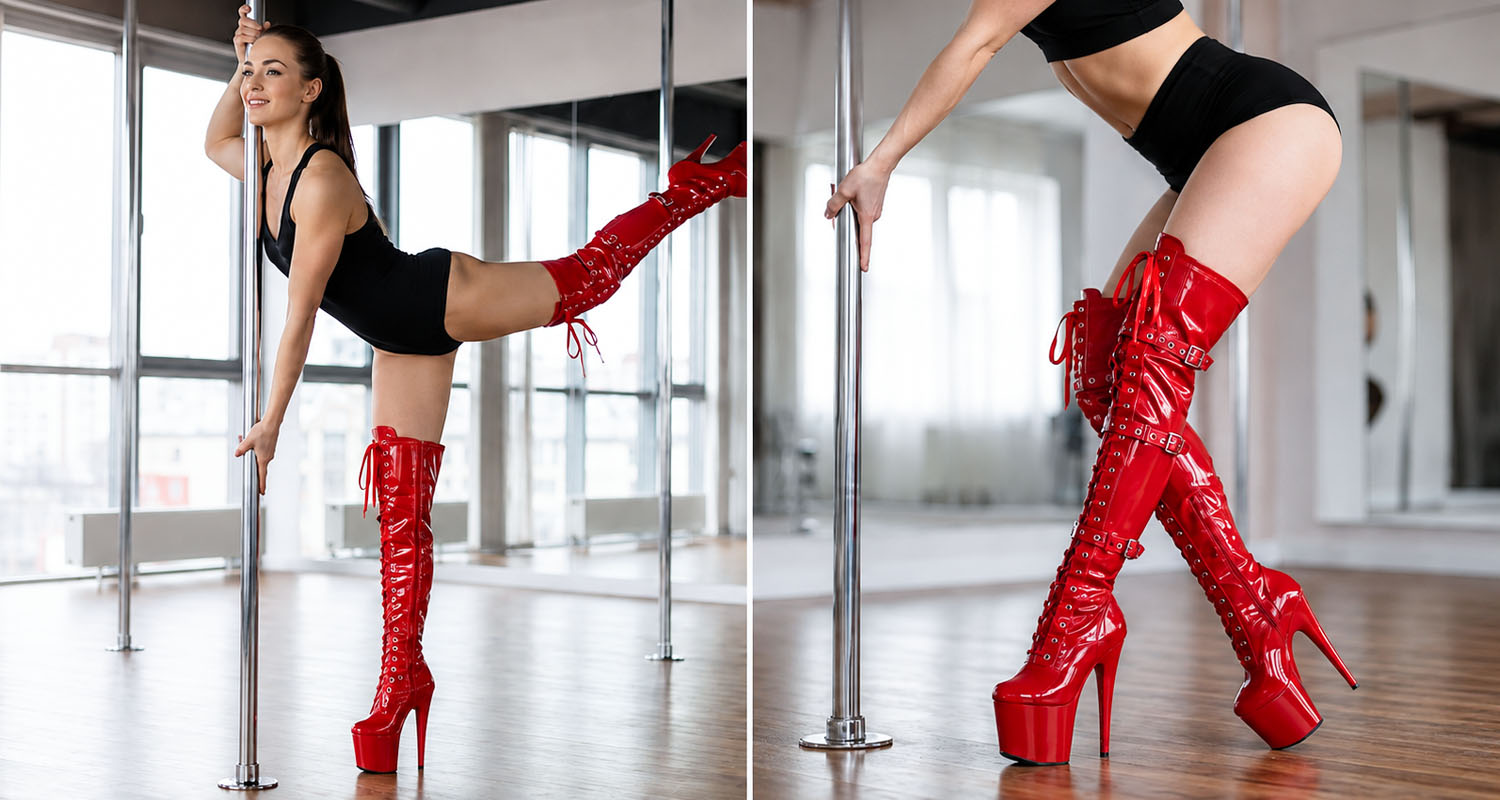
In reality, it is not about you or how often you train. Each height has its own support point, foot angle and load on the ankle, so a pair that feels easy for one body may remain uncomfortable for another for years. A difference of just a few centimeters in platform height changes the entire mechanics of movement. And technique developed in one pair may simply stop working in another. So instead of questioning yourself, it makes more sense to look at the physics behind it. That is where we will start, especially since it is fairly easy to understand.
Why ones and fives hold the foot at the same angle
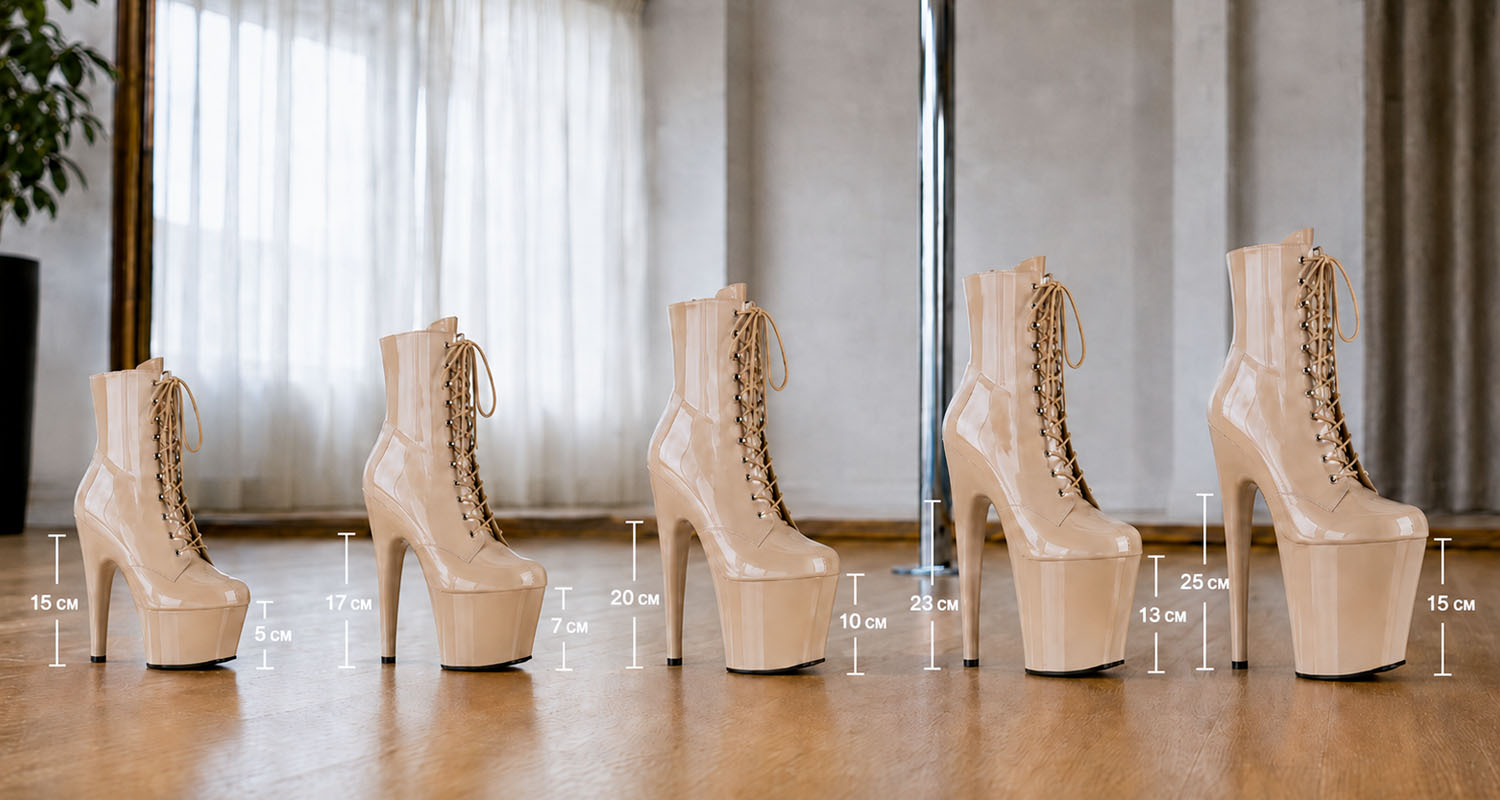
Everyone knows that strip heels come in heights from ones to fives. But few people actually look at the numbers behind those names, even though that is exactly where the answer lies:
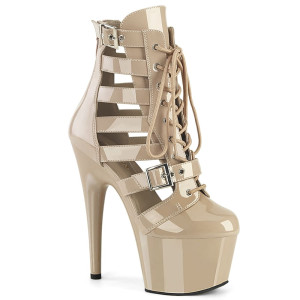
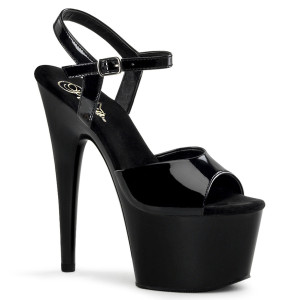
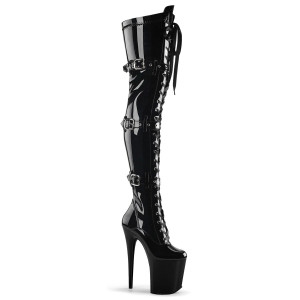
- ones – heel 6” (15 cm), platform 2” (5 cm);
- twos – heel 7” (17 cm), platform 3” (7 cm);
- threes – heel 8” (20 cm), platform 4” (10 cm);
- fours – heel 9” (23 cm), platform 5” (13 cm);
- fives – heel 10” (25 cm), platform 6” (15 cm).
Subtract the platform height from the heel height in any of these examples and you get the same difference – about 4” (10 cm). This is the incline at which the foot sits, and it remains the same in every pair. That means the arch of the foot in ones is under essentially the same angle as in fives.
So where does the difference everyone feels come from? It is not in the foot itself, but in the distance from the floor. In fives, you stand about 4” (10 cm) higher than in ones, and that is what changes the mechanics of balance.
How platform height affects balance
The body maintains balance according to a simple principle – your center of gravity needs to stay above your base of support. In strip heels, that base is already relatively small, and it does not become larger as the platform gets higher. Your center of gravity, however, rises together with you.
From there, pendulum physics comes into play. The higher the point, the more strongly even a small deviation affects your position. Lean a couple of degrees in ones and you may shift by a centimeter. The same couple of degrees in fives moves you much farther, so you have to correct your balance more quickly.
This leads to three things that almost everyone notices when moving to a higher platform:
- Your reaction needs to be faster. There is less time to correct your position because the deviation develops more quickly.
- The ankle helps much less. In regular shoes, the foot can make small automatic corrections, while on a high rigid platform it is much more fixed, so the knees and core have to do more of the work.
- The muscles get tired differently. The load shifts away from the foot and toward the thighs, glutes and lower back, which now have to keep the body upright.
That is why balance in strip heels is not simply about having strong ankles. It is about having a stable, engaged core that can keep your body centered above a narrow base of support.
What happens to spins
Spins are a separate story because height works in two directions at once.
The good news is that spinning on a higher platform can feel physically easier. The contact area with the floor is smaller, there is less friction, and the rotation can become faster with the same amount of effort. Many dancers notice that their pivot feels cleaner in threes than in ones, and that feeling is not necessarily imaginary.
The downside comes from the same reason. Less friction also means less control. A rotation that gets away from you will not slow down as easily on its own. You have to stop it with your body rather than relying on the foot, because the foot has far less freedom to make small corrections in this type of footwear.
There is also a third factor – time. On a higher platform, the turn happens faster, which means you have fewer fractions of a second to catch the stopping point and stabilize your body. That is where the feeling that the spin is “running away” comes from, even though you are doing everything the same way as before.
So height is always a trade-off – more speed for less control. That is why it is better to start getting used to a new pair with half turns, then move on to full turns, and only after that add combinations.
What strip heel platform height is best
If control depends directly on height, the next logical question is where the ideal middle ground lies. You can see the answer in almost any studio. Strip heels for beginners are usually ones, fours and fives are often brought out for shoots, while most everyday training happens in twos and threes.
The reason is simple. With heel heights around 7–8” (17–20 cm), you already get the elongated leg line that makes strip heels so visually distinctive, while the body still has enough time to correct itself when something goes wrong. Go lower and you gain more control, but the visual effect is subtler. Go higher and the result becomes more dramatic, but every small technical mistake becomes much more noticeable.
That is why the best height is the one in which you can practice your most difficult movement without being afraid of it. Anything you do on the floor can usually be adapted to almost any pair, but standing work and transitions are what truly test whether the shoes suit you.
How to improve balance in strip heels
But “not being afraid” is the result, not the starting point. Confidence comes from developed balance, and balance should be trained separately from combinations and choreography. The difficulty should increase gradually:
- Standing with support. Hold the barre and shift your weight from the heel toward the ball of the foot. The goal is to understand where your center is.
- Standing without support. Do the same thing with your hands free. Keep your core engaged, knees soft and weight over the ball of the foot.
- Shift your weight from one leg to the other. Move slowly and come to a complete stop on each side.
- Walk along the mirror. Keep your gaze straight ahead because lowering your head pulls the upper body forward.
- Practice half turns with support. Make half a rotation, stabilize, return, and only then move on to a full pivot.
Five minutes of these exercises a day can be more useful than an hour of chaotic attempts to spin. Just keep an eye on your posture – the core should stay engaged the entire time. Relax the abdomen and lower back, and your body can immediately start drifting no matter how strong your legs are. Stability usually develops over two to three weeks, first while standing and only later in motion.
Mistakes that make it harder to get used to the height
Even with this approach, mistakes still happen – there is no way around that. The bigger problem is that people can repeat some of them for years without noticing because they do not cause much trouble in ones. In threes, however, the same movement can suddenly destabilize the entire position.
One of the most common habits is looking down at your feet. The head weighs around 11 lb (5 kg), and when you drop it, it pulls the upper body forward. As a result, your weight shifts away from the support point before you even begin the movement.
The second issue is locking the knees. When people feel nervous, they instinctively straighten them, even though a locked joint cannot absorb small movements, so every deviation travels directly upward into the body.
The third is putting too much weight on the heel. The body naturally tries to lean backward away from the height, while the main support in strip heels should stay over the ball of the foot. Once the weight moves onto the heel, it starts working like a lever that can turn the body sideways.
Muscle memory can also work against you. A combination practiced in twos requires a different range of motion in threes, but the body does not automatically know that and repeats what it is used to. This is especially noticeable during transitions from the floor to standing.
What it all comes down to
Put everything together and the progression becomes clear. First, the body learns to maintain a vertical position at a lower height. Then it transfers that skill to a higher platform, and only after that adds speed to spins. Skipping a stage is difficult because every next step depends on the previous one.
Mistakes will not disappear completely – everyone makes them. They are simply less noticeable in ones and become obvious much faster in threes. And that can actually be useful. Height works like an honest mirror for your technique.
So if something suddenly falls apart in a new pair, it is not necessarily you or the shoes. Your body simply has not rebuilt its familiar movement patterns for the new conditions yet. Sometimes very small details get in the way – incorrect weight transfer, locked knees or trying to use old technique without adjusting for the new height. We cover more of these points in our article about beginner mistakes in strip heels.
Keep training and gradually getting used to the new height. One day you will catch yourself walking across the studio in threes without even thinking about your feet.
 Previous
.png) World
World
 France
